Commercial Parking Lot Repaving as an Investment
A commercial parking lot carries cars, delivery trucks and pedestrians every day a business is open. The asphalt wears under that traffic and under Ontario’s weather, and the owner eventually has to choose between continuing to patch the lot and repaving it.
Repaving is a large expense, so owners and property managers want to know what it returns and when the work makes financial sense.
The sections below start with how a parking lot deteriorates and how the cost of repair rises as the damage progresses. From there they explain how a contractor matches the repair to the damage, what a worn lot means for safety and the owner’s liability, and how its condition shapes the way customers and tenants see the property.
The last two sections cover tax treatment and how a crew phases the work so the business can stay open.
How Parking Lots Deteriorate
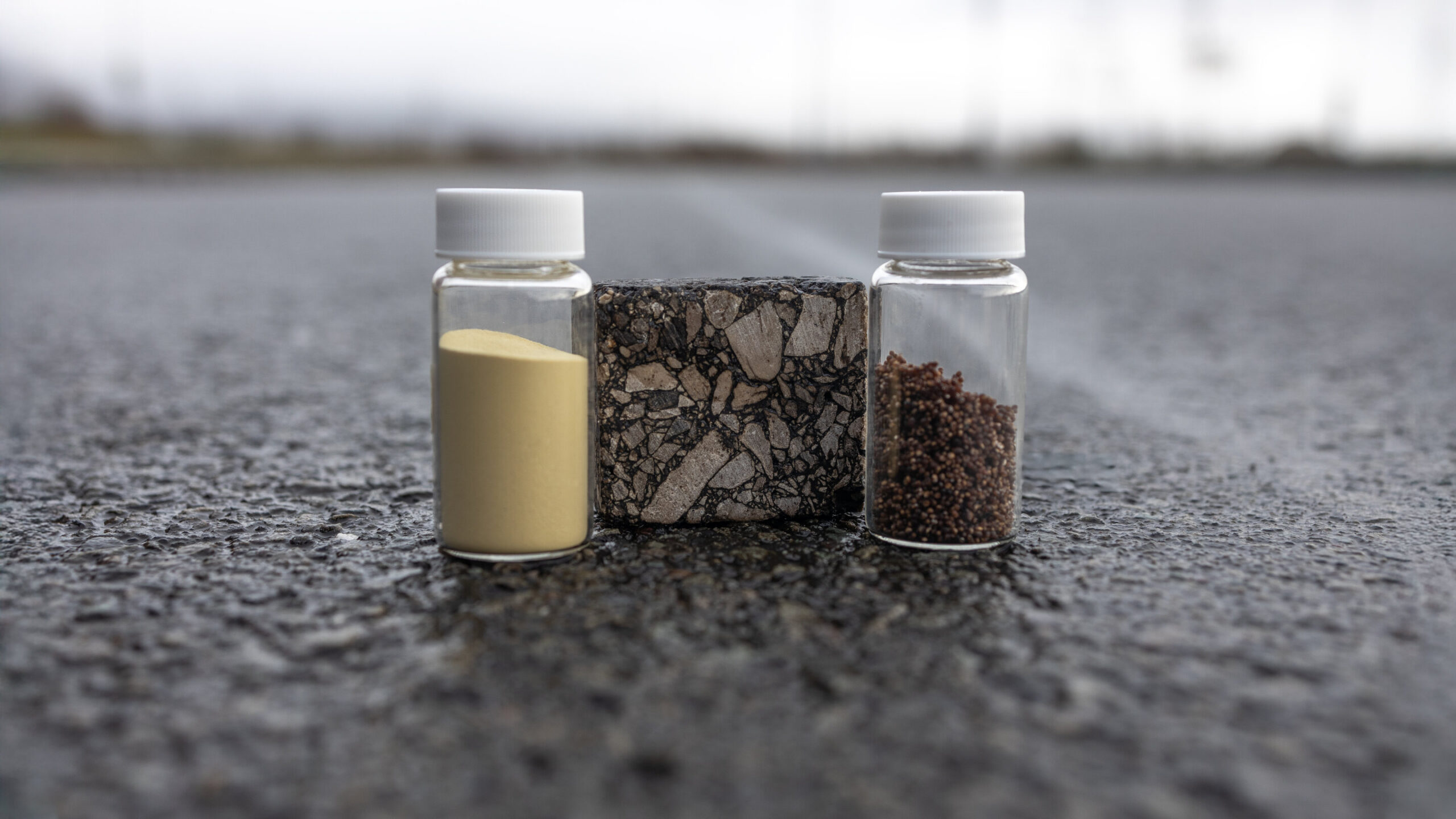
An asphalt parking lot is a layer of stone held together by asphalt binder and laid over a compacted gravel base. Over the years, sunlight and air harden the binder until the surface turns grey and brittle, and a brittle surface cracks under traffic and under the expansion and contraction that come with temperature changes.
Most of the serious damage starts once water gets into those cracks and soaks the gravel base.
Vehicles pressing down on the wet pavement force water back out of the cracks along with fine base material, leaving gaps under the asphalt. In winter the trapped water freezes and expands, and the gaps grow until the base can no longer support the surface. The asphalt then breaks into potholes, and most of them appear during the spring thaw.
On a commercial lot, delivery and garbage trucks put heavy loads on the entrances, the drive lanes and the pad in front of the dumpster enclosure, and drivers who turn their steering wheels while parked scuff the surface in the stalls. Through the winter, snowplow blades catch on raised patches and broken edges. Oil and fuel dripping from parked vehicles also soften the asphalt where they collect.
A faded surface with scattered individual cracks means the wear is still in the top layer. Once the cracks join into a network of small, many-sided pieces, known as alligator cracking, repeated heavy loads have worn out the pavement, and the base underneath has usually weakened.
The Cost of Waiting
Because each new crack lets in more water, the damage speeds up over time, and each stage costs more to fix than the one before it. Highway agencies plan around this by applying crack sealing and other low-cost treatments while a road is still in good condition, since rehabilitating or rebuilding a failed road costs more.
A commercial lot moves through the same stages, and the main repair options, in rising order of cost per square metre, are:
- Crack sealing and sealcoating, which keep water and sunlight out of a surface that is still intact.
- Patching, which removes and replaces isolated failed sections.
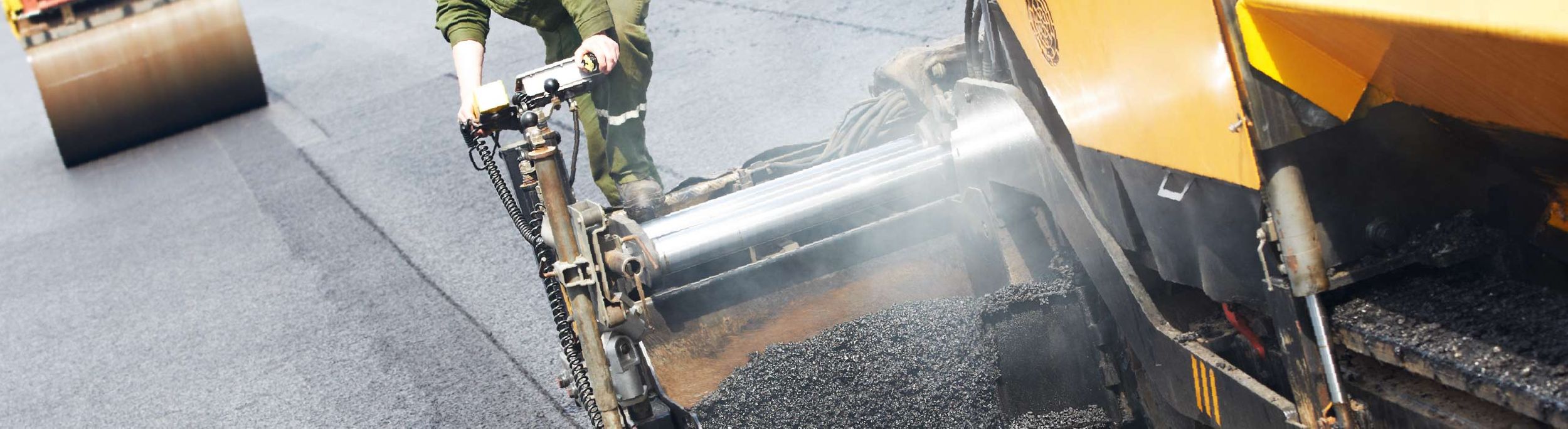
- Resurfacing, which grinds off the worn top layer and paves new asphalt over a base that is still sound.
- Reconstruction, which removes the asphalt and the failed base, rebuilds the base, and paves a new surface.
Repaving costs the owner the least when it’s done after wear and cracking have spread across the surface but before water has damaged the base, because resurfacing is still enough at that stage. Waiting until the base fails means paying for reconstruction, which rebuilds the base as well as the surface.
Putting off the work also costs money every year.
Old patches separate at their edges, new potholes open each spring, and each repair goes into a surface that will still need replacement. Repaving ends the yearly patching and puts the lot back on a regular maintenance schedule.
Once the new asphalt has cured, regular sealcoating and crack sealing lengthen the time before the next repaving. A smooth, level lot is also faster to plow in winter, with less wear on the plow blades and the pavement.
Matching Repair to Damage
Money spent on the wrong repair is lost, since new asphalt laid over a failed base cracks again along the same lines.
When the base is still sound, resurfacing is enough. Grinding the old asphalt off first keeps the finished surface level with the curbs and catch basins, so water still drains the way the lot was designed.
When the base has failed, reconstruction is the only lasting repair. The crew regrades and compacts a new gravel base before any new asphalt goes down, so the job costs more and takes longer than resurfacing. A driveway follows the same rule when the choice is between resurfacing and replacement.
On many commercial lots, the parking stalls still sit on a sound base while the main entrance or the loading area has failed under truck traffic. In that case a contractor can dig out and rebuild the base in those sections and resurface the whole lot, for less than reconstructing all of it.
Crews also regrade low spots and rebuild damaged catch basins during the same project, so water stays off the new surface and out of the new base.
A contractor works out which of these repairs a lot needs during an on-site assessment, looking at the crack patterns, noting where water ponds after rain, checking the catch basins and curbs, and sometimes digging a test hole to see the base directly.
Safety and Liability
A damaged lot also costs money outside the repair budget, because it puts the people using it at risk. Potholes and broken or heaved edges are trip hazards for pedestrians walking between their cars and the entrance, and deep potholes damage the tires and suspension parts on customers’ vehicles.
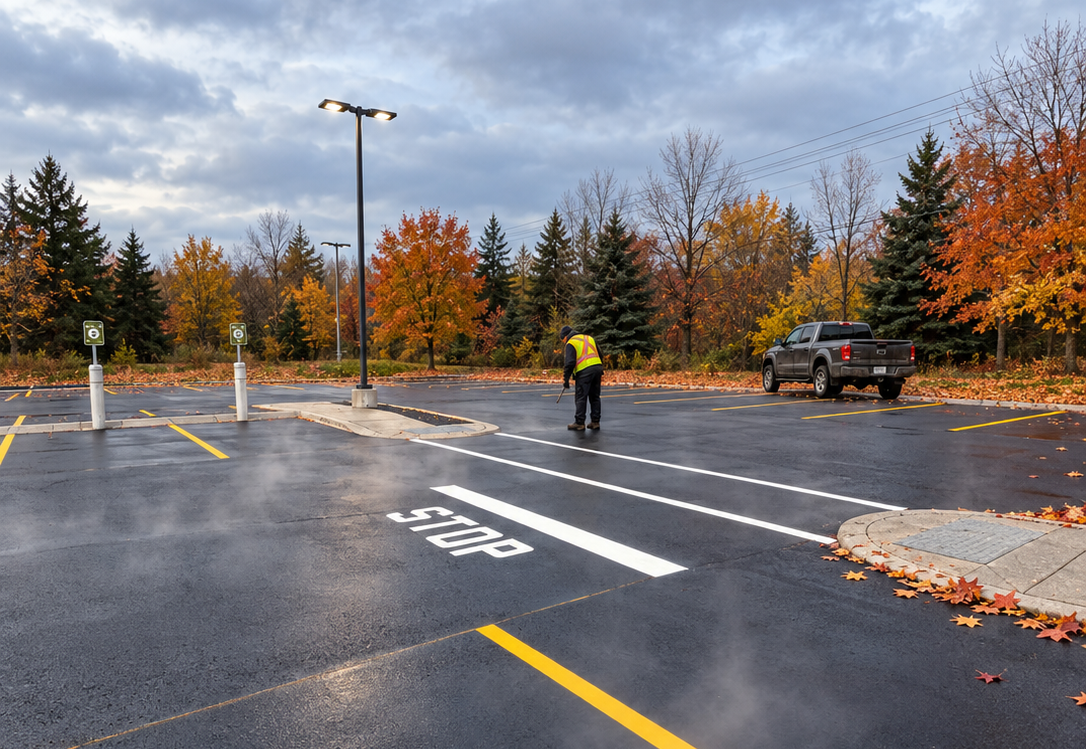
After rain, standing water collects in low spots and around blocked or broken catch basins, and in cold weather it freezes into ice where people walk. Faded line markings add to the risk, since drivers cut diagonally across empty stalls and park in fire routes, and pedestrians lose the marked crossings that lead them to the entrance.
Under Ontario’s Occupiers’ Liability Act, anyone in possession of a property, or responsible for its condition, has to take reasonable care to keep the people who enter it safe. The duty covers tenants and property managers as well as owners.
Regular inspection and prompt repair of any hazards found are part of meeting it, and an injury claim from a fall in a pothole can cost an owner more than the repair would have.
Repaving brings new markings and sometimes a new layout. Ontario’s accessibility standards set the number and size of accessible spaces in lots that are newly built or redeveloped, so before the work starts the owner can confirm whether the project counts as redevelopment and where those spaces have to go.
Appearance
The parking lot is the first part of a business a customer drives onto and walks across, so its condition shapes how customers and tenants see the whole property.
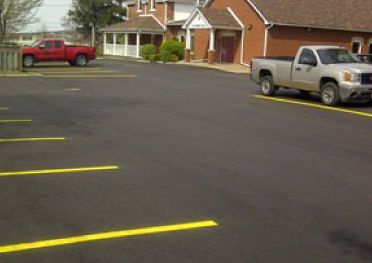
An even black surface with sharp, clean markings makes a property look cared for. Potholes, overlapping patches, faded lines and weeds growing from the cracks make the same building look neglected.
When the property is sold or leased, the building inspection covers the paving, and a lot near the end of its life appears in the report as an upcoming cost for the new owner or tenant.
Tax Treatment
The after-tax cost of repaving depends on how the Canada Revenue Agency classifies the work.
The CRA lists parking lots in Class 17 for capital cost allowance, at a rate of 8%, and work that improves an asset beyond its original condition is generally a capital cost that the business deducts gradually through that allowance.
Work that maintains an asset or restores it to its original condition is generally a current expense, deducted in the year the business pays for it.
Repaving can fall into either group, depending on whether the job restores the existing lot or enlarges and upgrades it, and an accountant decides the treatment after reviewing the scope of work and the invoice.
A Phased Schedule
Business lost while the lot is closed is part of the cost of repaving, and a crew can keep that loss down by phasing the job. The crew paves one section at a time while customers and deliveries use the rest, and each section reopens once the new asphalt has cooled and hardened and the line markings are down.
An owner who has the lot assessed over the winter has time to budget for the work and can book a date early in the paving season.
Ital Paving Commercial Services
Once a lot is repaved, the owner stops paying each spring to patch a surface that is failing underneath, and the new asphalt needs only periodic crack sealing and sealcoating to stay in good condition. The same work removes the potholes, ponding water and faded markings that lead to falls and injury claims, and it leaves customers and prospective tenants with a property that looks well kept.
How much of that return the owner keeps depends on timing. Resurfacing a lot while its base is still sound costs less than rebuilding the base after it fails, so an assessment that catches the damage early leaves the owner with the smaller bill.
Ital Paving has worked on commercial properties in Central Ontario since 1985, from Barrie and Orillia to Muskoka, and its crews handle each stage of that work. They sealcoat and patch lots that are still sound, resurface lots whose top layer has worn out, and build new parking lots from the base up. The same crews reconstruct catch basins and storm sewers and regrade low spots, so drainage problems get fixed as part of the paving project.
Ital Paving phases commercial jobs so customers and deliveries can keep using part of the lot while the work goes on. Every commercial job comes with a written guarantee and needs no deposit. To book an assessment of your parking lot, contact Ital Paving.
Related Articles
Residential & Commercial Estimate Request
Ital Paving provides free, no-obligation onsite consultations for all residential and commercial paving projects.
Our experts will perform a technical assessment of your property in Barrie, Orillia, or Muskoka to ensure your new infrastructure meets the highest standards of safety and durability. Complete this short form today to get started.