How to Tell If Your Driveway Needs Resurfacing
The decision comes down to one thing: resurfacing fixes problems on the surface, and replacement fixes problems underneath it. If the damage is in the top layer of asphalt, you can resurface. If the base or the drainage has failed, you need to replace it. Everything else is just figuring out which one you’ve got.
Plenty of homeowners get this wrong in both directions. Some see a faded, cracked surface and assume the whole thing has to go. Others see potholes coming back in the same spots every spring and think a fresh coat will fix it. Both mistakes cost money, so it’s worth knowing what you’re looking at before you call anyone. This article covers what to look for so you can make the right call.
Why the Base Matters More Than the Surface
An asphalt driveway is two parts. There’s the surface you drive on, and there’s the compacted gravel base underneath holding it up. The base is the part you can’t see, and it decides which repair you need.
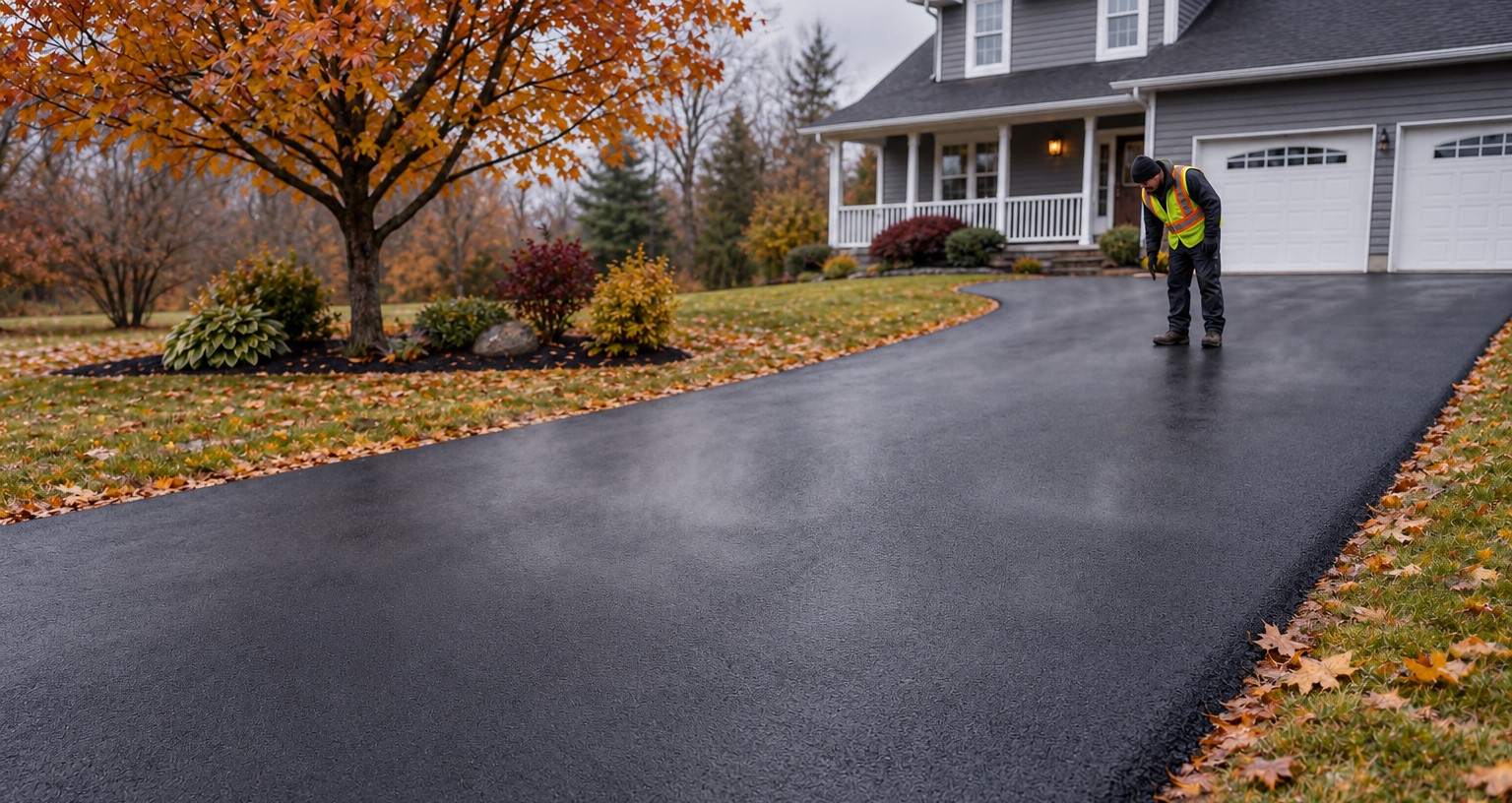
When the base is solid and the damage is only on the surface, you can resurface. A new layer of asphalt goes over the old one, usually an inch and a half to three inches thick, after the surface is cleaned and any potholes or wide cracks are repaired. That adds another ten to fifteen years of life at roughly a third to half the cost of full replacement. It’s a real repair, not a patch.
When the base has failed, resurfacing doesn’t work. A new surface over a base that’s shifting and breaking up will crack again within a year or two, in the same places. You’ll have paid for a repair that didn’t fix anything.
So the question isn’t how bad your driveway looks. It’s whether the foundation underneath is still solid.
Signs Your Driveway Is a Candidate for Resurfacing
If the damage is on the surface only, resurfacing is usually the better value. Surface-level damage looks like this:
- Hairline and narrow cracks in mostly straight lines. These are oxidation, the asphalt drying out and getting brittle with age. They haven’t reached the base.
- A dull, gray, worn-out look. The black is gone, the surface feels rough, and there may be loose grit. The top layer is wearing down, but the structure is fine.
- Minor raveling, where loose stone starts coming free at the surface but the layer below is still intact.
- Small, isolated low spots that hold a little water, the kind that can be corrected as part of the new layer.
None of these go deep. The driveway is worn, not broken. If yours is under twenty years old, drains well, and the cracks are scattered rather than networked together, it’s most likely a resurfacing job. A new layer will restore the look and add real years.
There’s one thing to keep in mind, though: most driveways can only be resurfaced once or twice. Each new layer raises the height by an inch and a half or two, and after a couple of those the grade starts to interfere with your garage door and the edges where the driveway meets the sidewalk or road. At that point replacement is the better option no matter how the base is doing.
Signs Your Driveway Needs Full Replacement
These are the symptoms of a failed base, and resurfacing can’t fix any of them:
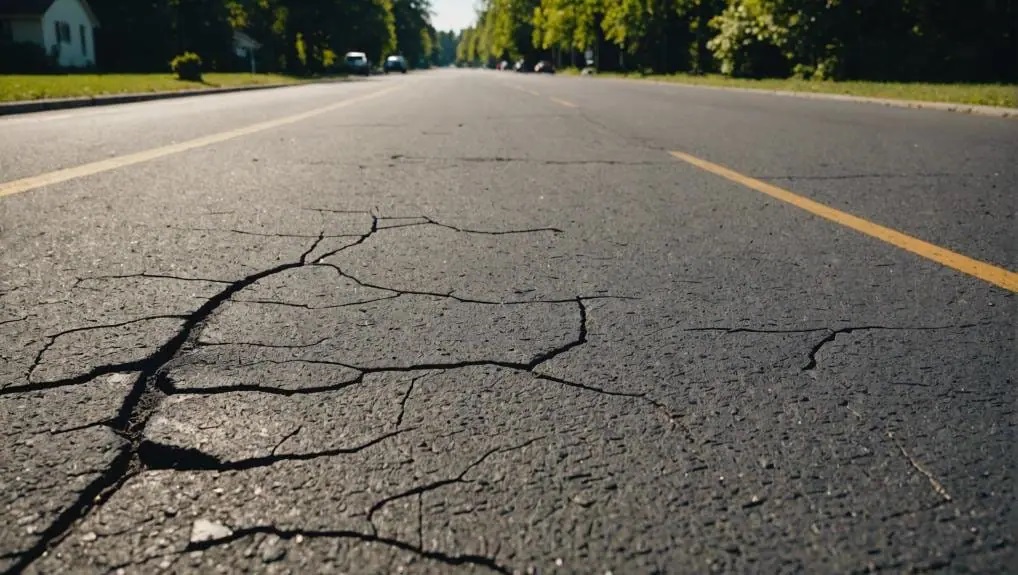
- Alligator cracking. Interconnected cracks forming small, irregular shapes across a section, like the pattern on reptile skin. It means the base can no longer support the weight on top, so the surface flexes and cracks under every vehicle. When it covers more than twenty to thirty percent of the driveway, resurfacing is a waste of money.
- Standing water that won’t drain. Puddles still sitting a day after the rain stops mean water is getting into the base and weakening it. Drainage is a base and grading problem, and a new surface won’t solve it.
- Potholes that keep coming back in the same spot. When you patch a pothole and see it return to the same place a few months later, the base under that spot is the problem, not the surface.
- Sections that have sunk or lifted. Soft spots that give underfoot, ruts in the wheel paths, or sunken areas all mean the ground below has moved or lost strength.
- Age plus past overlays. Asphalt driveways usually last fifteen to twenty years, a bit longer if they’ve been sealed and maintained. Once you’re past that and the driveway has already been resurfaced once or twice, full replacement resets the clock to twenty or thirty years and usually pays off over the next decade.
If you’re seeing one or two of these across a large area, you’re looking at replacement. Full replacement strips the old asphalt down to the soil, regrades and recompacts the base, and lays fresh asphalt on a foundation that works. It costs more up front, but it doesn’t fail again in a year.
Why Paving Over a Failing Base Wastes Money
A new layer of asphalt over a failing base just hides the problem, and only until the failure underneath pushes back through, which happens fast.
Sealcoating works the same way. It’s good maintenance on a sound driveway and does nothing for a failing one. A sealed driveway with alligator cracking under it still has alligator cracking.
The cheapest quote isn’t always the cheapest job, for the same reason. A contractor who recommends resurfacing on a driveway that clearly needs replacement is either not looking closely or is fine with charging you twice. The right repair done once costs less than the wrong one done cheap.
What Each Job Involves: Cost, Time, and Disruption
The two jobs are different in cost, time, and how much they tear up. That matters for planning, not just budgeting.
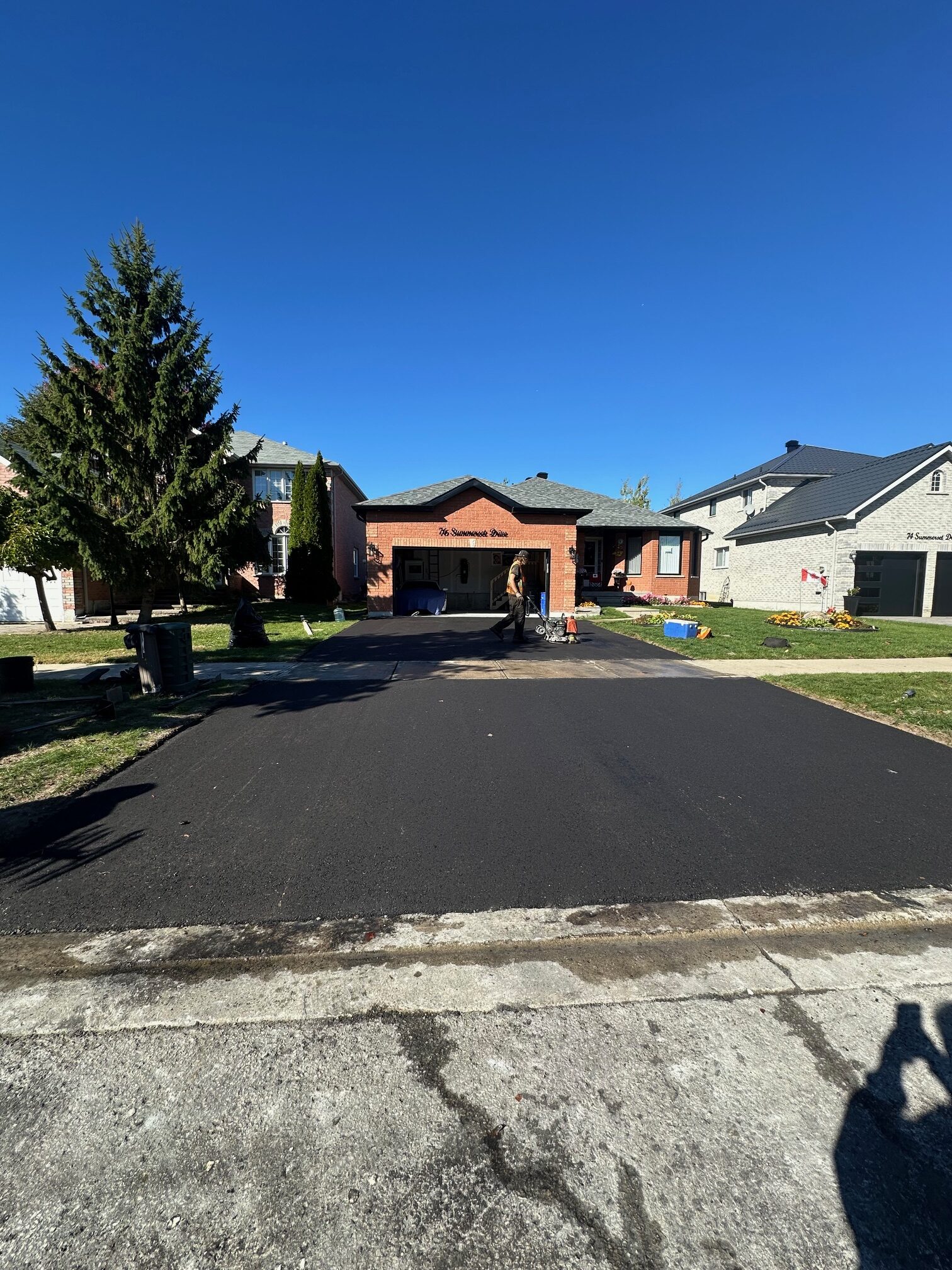
Resurfacing is the lighter job. The crew cleans the surface, fills the cracks and patches the potholes, applies a bonding coat so the new asphalt sticks to the old, and lays the new layer on top. Most residential driveways are done in a day, and you’re back to using it within a day or two after that. Because the base stays in place, there’s no digging and no regrading.
Replacement is the bigger job. The old asphalt comes out, the base gets regraded and recompacted, drainage gets corrected if it needs it, and fresh asphalt goes down on top. It takes longer, costs more, and your driveway is out of use for a few days. In return you get a driveway that starts its life over instead of one that’s borrowing time from a worn-out base.
If both options are genuinely on the table for your driveway, the cost gap is real. Resurfacing usually runs a third to half of what full replacement costs. When the base is sound, that gap is a strong argument for resurfacing. When the base has failed, it’s no argument at all, because a cheaper repair that fails in a year isn’t actually cheaper.
What if Only Part of the Driveway Has Failed?
This comes up a lot. The damage isn’t spread evenly. One section near the road has alligator cracking and the rest looks fine. In that case you don’t always need to replace the whole thing.
When base failure is limited to a defined area, a contractor can remove and rebuild just that section, then resurface over the full driveway so it looks uniform. For a contained problem, that approach often strikes the right balance between cost and doing the job properly.
The catch is that it only works when the failure really is contained. If the cracking and soft spots are showing up in several places, the base is usually going across the board, and patching one area just moves the next failure a few feet over. A proper look by a professional is what tells you which situation you’re in.
How Ontario Winters Affect the Decision
Around Barrie, Orillia, Gravenhurst, and up through Muskoka, the freeze-thaw cycle works against you. Water gets into a crack, freezes, expands, and widens the crack. Thaw, refreeze, and repeat all winter. A small crack you could have sealed in the fall can become a real problem by spring.
Frost heave only adds to it. When moisture in the ground freezes and the soil lifts, it can shift the base under the driveway, and the clay-heavy soil common in this area is especially prone to that. A base problem here tends to get worse quickly once it starts, which is why catching the difference between a surface issue and a base issue early is worth doing.
The longer water has been getting in, the more likely the answer has moved from resurface to replace.
Get a Professional Assessment Before You Decide
Most homeowners can’t tell which situation they have just by looking, and there’s no shame in that. Asphalt hides what’s happening underneath until the damage is far enough along to show through, and by then the easier repair window has sometimes already passed. A set of straight cracks and a patch of alligator cracking can sit a few feet apart on the same driveway and call for completely different work.
An experienced contractor earns their keep here. A good one will check the cracking, the drainage, and the grade, find the soft spots and recurring trouble areas, and tell you plainly whether the base is fine or finished. Then they’ll explain the reasoning instead of just quoting a number.
We’ve been doing this across Barrie, Central Ontario, and Muskoka for forty years, and the assessment is part of the job, not an upsell. If you’re not sure which way your driveway goes, the best first step is to have someone who does this for a living take a proper look before you spend anything. You can request a free, no-obligation onsite estimate from our team, and we’ll tell you what your driveway actually needs.
Related Articles
Residential & Commercial Estimate Request
Ital Paving provides free, no-obligation onsite consultations for all residential and commercial paving projects.
Our experts will perform a technical assessment of your property in Barrie, Orillia, or Muskoka to ensure your new infrastructure meets the highest standards of safety and durability. Complete this short form today to get started.