Why the Gravel Base Decides How Long Your Driveway Lasts
Two contractors quote the same driveway, and one price comes in noticeably lower. The asphalt looks the same in both proposals: same black surface, same finish, sometimes even the same thickness on paper.
So what explains the gap?
In most cases, the answer is buried where you can’t see it.
The lower quote is saving money on the work that happens before any asphalt is laid: the excavation, the gravel, and the compaction underneath. That work is what decides whether a driveway lasts twenty-five years or starts cracking by its third spring.
Ital Paving has been building driveways across Barrie, Central Ontario, and Cottage Country for over forty years. The single most useful thing a homeowner can understand before signing a contract is simple. The asphalt on top is the part you see. The base underneath is the part that does the work.
The Surface Gets the Credit, the Base Does the Work
Most people picture a driveway as a slab of asphalt sitting on a bit of gravel, with the gravel as an afterthought. It works the other way around.
The compacted gravel base is the structure. It carries the weight of your vehicles, spreads that weight across the soil, and stays stable through Ontario’s freeze and thaw cycles. The asphalt is the wearing surface, a tough, weatherproof skin that seals the top and gives you a smooth surface to drive on.
A good base under a thin layer of asphalt will outlast a thick layer of asphalt over a poor base every time, because the surface can only hold up if the ground beneath it stays still.
A simple comparison helps. Build a deck on rotten posts and it doesn’t matter how good the boards are, because the whole structure sags and pulls apart at the joints. Asphalt behaves the same way. When the base shifts, the asphalt moves with it, and asphalt that is forced to flex and settle is asphalt that cracks.
Why a Good Base Beats Thick Asphalt
More asphalt sounds like a better driveway. More material should mean more durability, so a thicker surface ought to last longer. This isn’t the case.
Asphalt is strong under direct pressure, but it isn’t rigid like concrete. It’s made to flex slightly under load while resting on a stable foundation. It can’t span a gap or hold its shape when the ground below it sinks or heaves. Adding an extra inch of asphalt over a base that wasn’t compacted properly only adds weight to a structure that was going to fail regardless, and the thicker layer often breaks into larger pieces when it does.
A properly built base does the opposite.
When the gravel underneath is the right material, laid at the correct depth, and compacted in layers with no soft spots, the weight from your vehicles spreads across a wide, solid platform. The asphalt on top does very little work. It isn’t fighting movement or bridging empty space. It’s sealing the surface and keeping out the weather.
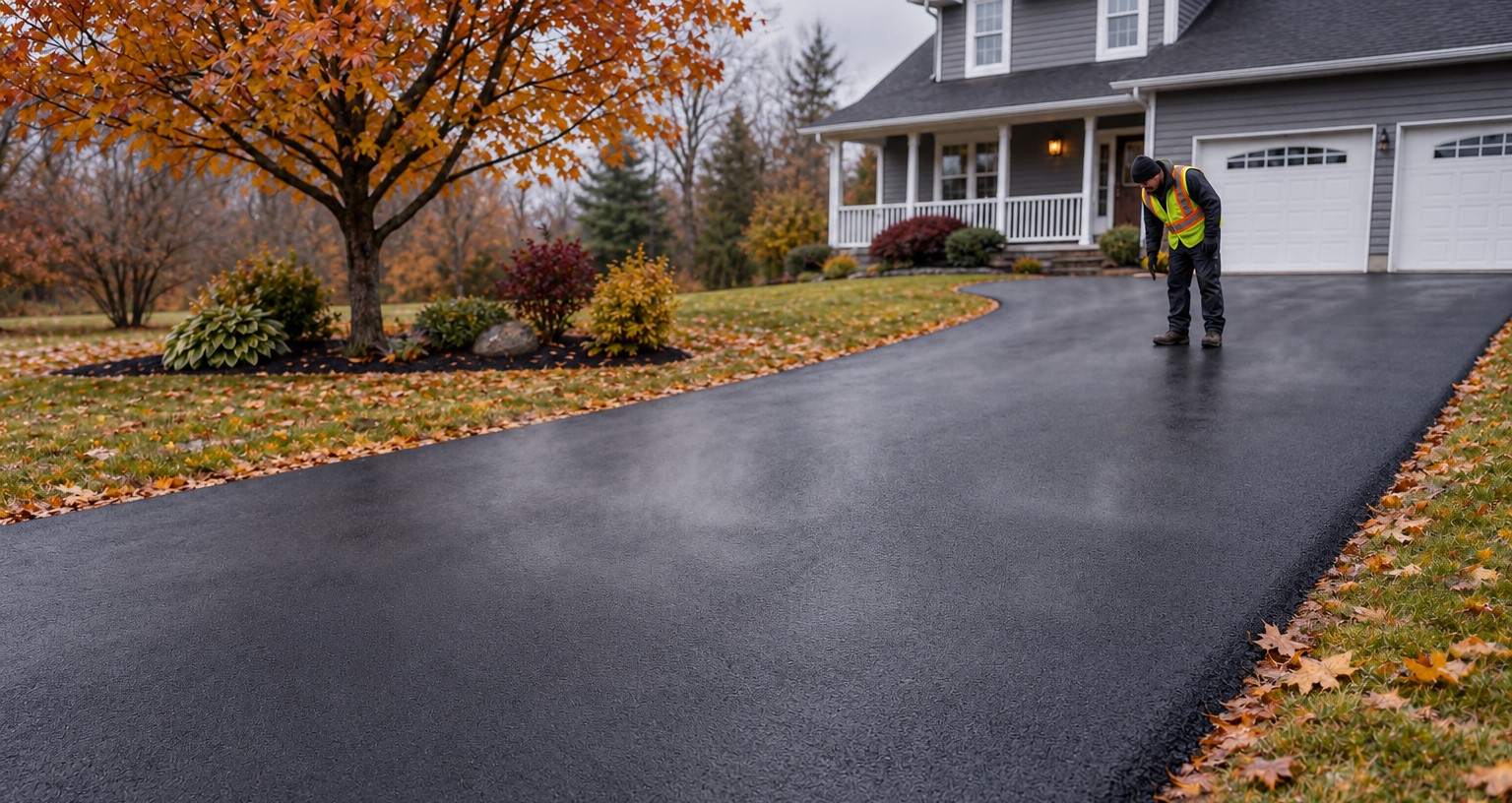
For a standard residential driveway used by passenger vehicles, the surface asphalt usually measures about two to three inches once compacted. That is enough, provided the base beneath it is sound.
The budget is far better spent on building the base correctly than on adding asphalt to make up for a base that was rushed.
What a Proper Base Build Involves
Preparing the base is not a single step. It is most of the job.
A complete base build includes the following, and each item tends to get skipped when a quote comes in unusually low.
- Excavation to the correct depth. Excavation costs significant money and offers the easiest place to cut corners. For a residential driveway in this climate, it usually means digging out roughly fourteen to twenty inches of total depth, depending on the soil. The work involves removing topsoil, roots, and any organic material that will rot and settle later, and reaching deep enough that the base sits below the frost line.
- Preparing and checking the soil. The natural soil left after excavation is called the subgrade, and it has to be stable before anything is placed on top of it. Across much of Central Ontario, that means working with clay, which swells when wet and shrinks when dry. Soft, wet, or unstable areas are addressed at this stage rather than paved over.
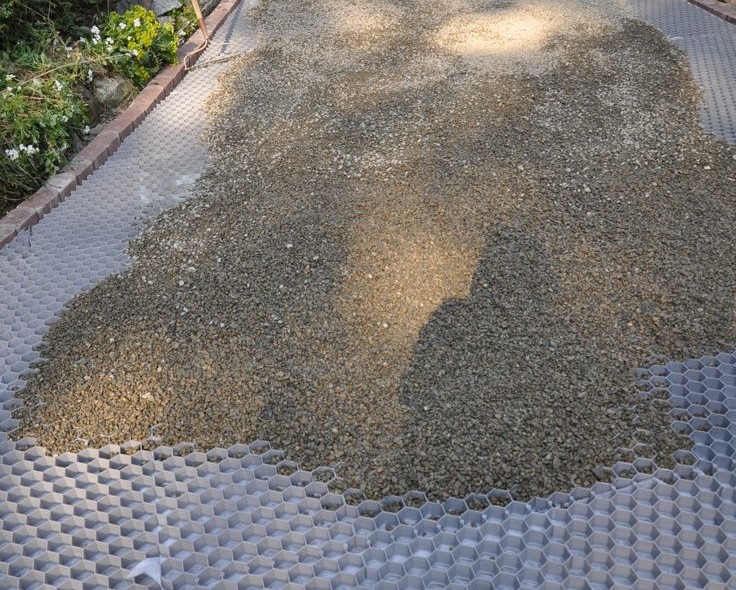
- The right gravel, in the right order. A proper base is built in layers rather than dumped in as a single load of whatever gravel is cheapest. The lower layer is a coarser stone, usually a Granular B in Ontario, which forms the deep structural foundation. On top of it goes a finer, well-graded crushed material, a Granular A, which packs into a tight, dense surface for the asphalt to bond to. Each material has a purpose. Skipping the layering or using the wrong stone produces a base that drains poorly and shifts under load.
- Grading for drainage. Water is the main cause of driveway failure. The base has to be shaped so water runs off the surface and away from the house rather than pooling underneath, where it can saturate the soil and freeze. A flat, poorly graded base traps water, while a correctly sloped one sheds it. The difference is hard to see by eye but clear within a few winters.
- Compaction in layers. Compaction separates a base that lasts from one that fails, and it disappears from view the moment the asphalt goes down. Gravel must be compacted in lifts, meaning a few inches at a time, with each layer rolled solid before the next is added. Dumping the full depth at once and rolling only the top produces a hard crust over a loose middle that compresses in its first winter under load. Done correctly, compaction turns loose stone into a single solid platform with the air pressed out of it.
On more difficult sites, there is often one more step: a layer of geotextile fabric between the subgrade and the gravel. It resembles landscape cloth and costs very little, but it stops the clay below from working its way up into the stone over time, which would otherwise contaminate the base and reduce its drainage. It is common on Cottage Country properties where the soil changes across the length of a driveway.
Why the Lower Quote Costs Less
Once you understand the base, the lower number becomes easier to read. No contractor saves much on asphalt, since the price of hot mix is fixed. The savings come out of the ground.
The most common shortcut is excavating less, which leaves too little depth for a proper base and too little protection from frost. From there, a crew can skip the layered gravel and drop a thinner, single load of whatever is on hand. Rolling the surface once instead of compacting in lifts saves time too, and it looks identical on day one before failing by year three. Drainage and grade get ignored for the same reason: skipping them costs nothing up front and a great deal to fix later.
None of this is visible at handoff. A rushed base and a proper base look the same once the asphalt is down and the crew has left. Both are smooth, both are black, and both look good in spring sunshine.
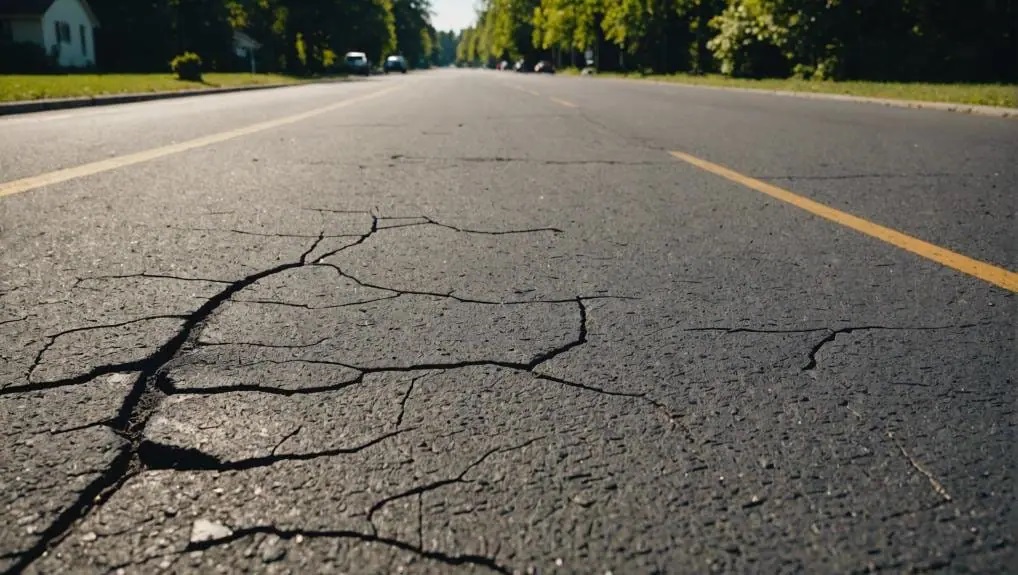
The difference appears later, as cracks that spread from nowhere, low spots that hold puddles, edges that crumble, and the slow waviness of frost heave lifting and dropping the surface each winter until it breaks.
By then the contractor who cut the corners is long gone, and you are pricing the job a second time.
What to Ask Before You Sign
You don’t need to become a paving expert to protect yourself. You only need to ask about the part of the job that contractors rarely explain on their own.
Five questions cover most of it:
- How deep do they plan to excavate, and why does that depth suit your soil?
- What gravel do they use, and do they build the base in layers?
- How do they compact it, in lifts or all at once?
- How do they handle drainage and grade?
- What do they do if they reach soft or wet soil partway through?
A driveway is a purchase where the lowest price is rarely the best value and almost never the cheapest over its full life.
Paying a little more for a properly built base buys roughly twenty years of dependable surface. Saving a few dollars on what lies underneath usually means paying for the work again much sooner.
If you are comparing quotes for a new driveway and want a clear answer about what is going under your asphalt, Ital Paving is glad to explain it. We have been doing this work across Barrie, Muskoka, and Central Ontario for four decades, and we will tell you plainly what your site needs and what it does not.
Reach out for a free, no-obligation onsite consultation and we’ll take a look at what you’re working with.
Related Articles
Residential & Commercial Estimate Request
Ital Paving provides free, no-obligation onsite consultations for all residential and commercial paving projects.
Our experts will perform a technical assessment of your property in Barrie, Orillia, or Muskoka to ensure your new infrastructure meets the highest standards of safety and durability. Complete this short form today to get started.