
Why Late Summer Is Best For Barrie Driveway Paving
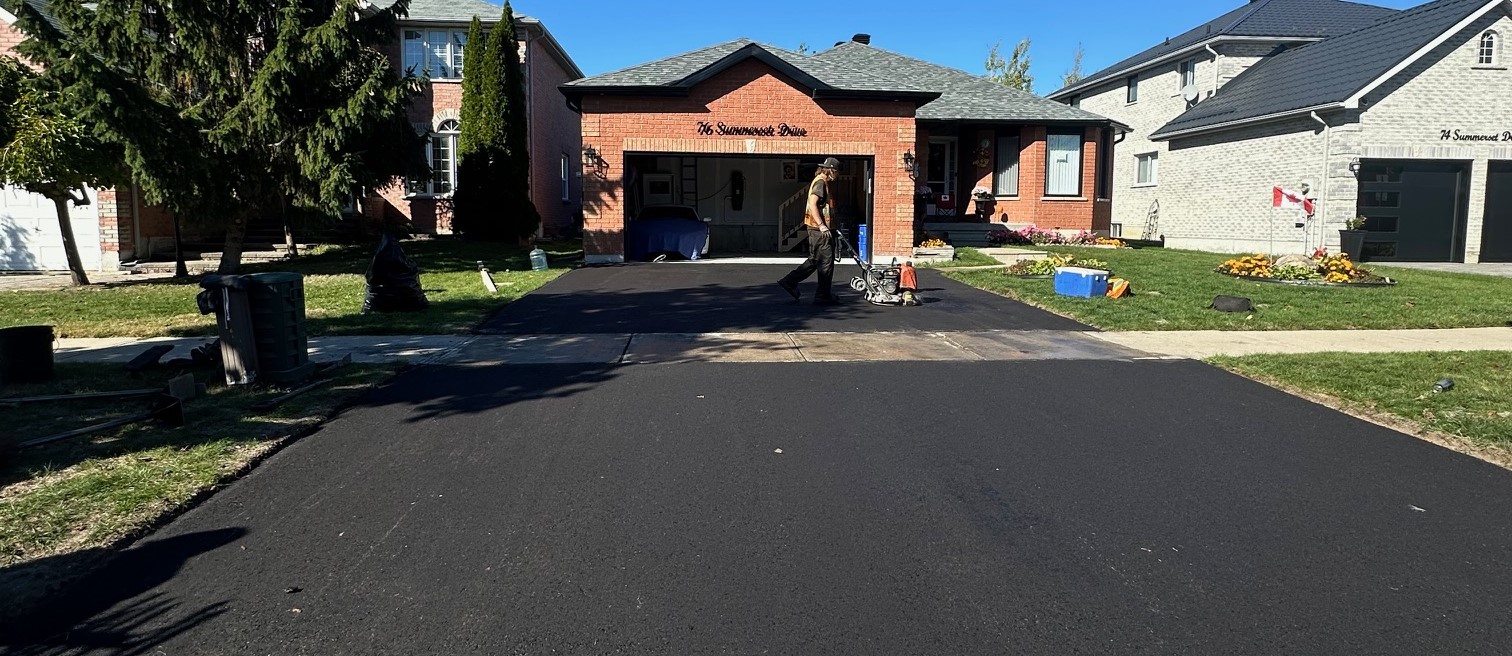
The paving season in Central Ontario runs from roughly May through October. Most homeowners get quotes in the spring and accept whatever date they’re offered inside that window.
Around Barrie, the last week of August through the end of September is the best stretch of the season, because that’s when the ground under a driveway is at its driest and its warmest. This article explains what changes in the ground over a summer, and what to look at on your own driveway before you book anything.
The Ground Underneath
An asphalt driveway is a compacted gravel base with a layer of asphalt over top. The base carries the weight of vehicles and spreads it across the soil underneath. The asphalt seals the base against water, and it carries very little weight on its own. When a driveway fails early, the failure usually started below the asphalt.
Spring is the wettest the ground gets all year. Meltwater soaks into soil that’s still thawing and has nowhere to drain, turning it to mud. Municipalities across Ontario respond by restricting heavy trucks on local roads until the ground dries out, and the ground under your driveway isn’t any different.
By the third week of August, a hot summer has pulled that water back out. The ground is firm rather than wet clay, and it can be excavated and compacted properly.
Gravel only packs down properly inside a narrow range of moisture, and provincial standards set tight limits on how wet it can be when a crew compacts it.
When it’s too wet, water fills the gaps the stone needs to lock into, and rolling it further won’t tighten it. A base laid on wet ground holds up through the first year and then settles unevenly, leaving low spots that hold water, dropped edges, and premature cracking.
Dry ground also makes it easier to find problems before they get paved over.
Soft areas, old fill, buried stumps and roots, and poorly built sections from earlier work all show up under a loaded truck while the soil around them stays firm. On wet ground everything sinks a little, so a bad patch and a solid one look the same.
Warm Ground, Slower Cooling
Soil temperature is weeks behind air temperature. The ground warms slowly through the spring while the air warms faster, then holds that heat into the fall after the air has already cooled. That lag puts the warmest ground of the year in late August and early September.
Fresh asphalt loses most of its heat into the ground it’s laid on rather than up into the air. Asphalt on ground at 20°C stays workable longer than the same asphalt on ground at 8°C, even when the air temperature is the same on both days.
More working time means more roller passes before it hardens, and how tightly it is packed determines whether the finished driveway sheds water or absorbs it.
Minimum temperatures for laying asphalt govern both ends of the season. A day that barely clears the minimum and a mild day in early September both count as paving weather, but they won’t give you the same driveway.
What Curing Means
Hot mix asphalt doesn’t cure the way concrete does, because there’s no chemical reaction to set it.
It arrives on site well over 100°C and gains its strength by cooling while the rollers compact it. By the time it has cooled to the air temperature, most of the strength it will ever have is already there. The lighter oils work their way out of the surface over the following months, and the asphalt hardens and fades from black toward grey.
A new surface stays soft for weeks, and a stretch above 30°C keeps it soft for longer, so warm weather does the opposite of what the common claim about faster curing in late summer suggests.
Vehicles stay off for the first 24 to 48 hours, and the edges need longer than that. Nothing supports a driveway from the side, so the outer few inches crack and break away under a wheel that runs over them, and backfilling the shoulder with topsoil once the surface has hardened gives that edge something to lean on. Turning the wheel while the car is parked will scuff the surface, and a trailer jack left standing on it will sink in. Sealing has its own timeline, covered in the post on asphalt driveway sealing.
Time Before Frost
Barrie’s average first fall frost arrives around October 8, and freezing nights are routine through November. The city averages 29 days above 10°C in September, 22 in October, and six in November.
A driveway paved in the last week of August gets roughly six weeks of warm weather before the ground starts to freeze, and one paved in the third week of October gets a few days. Those weeks let the surface harden and the edges settle under normal use. They also leave enough time to spot a drainage problem and fix it while a crew can still get on site.
A properly compacted October driveway comes through its first winter without trouble, and a fall installation isn’t a compromise when the work is done right. The later it gets, the less room there is for error. Asphalt can’t go down on a wet surface or a wet base, so a rainy week takes out the days after it as well as the days it falls on. In late August, a day lost to rain costs a day. In late October, a day lost to rain can push the job past the point where it’s warm enough to do properly, and the work either waits until spring or goes ahead in conditions that won’t support it.
Scheduling The Work
Spreading and rolling have to be finished before the sun sets, so an August day gives a full shift and a late October day only a few useful hours.
The longer day also lets a crew split the job into stages, with excavation and base work several days ahead of the paving, leaving time to check the finished base and correct soft spots before any asphalt is ordered. Late in the season all of it happens in a single day, and the base gets covered the same afternoon it is built.
The good weeks fill first, and a call in mid-August for a driveway in Barrie usually means a September date. In Muskoka, where the season is shorter and the sites are harder to reach, that gap runs longer still.
Checking Your Driveway
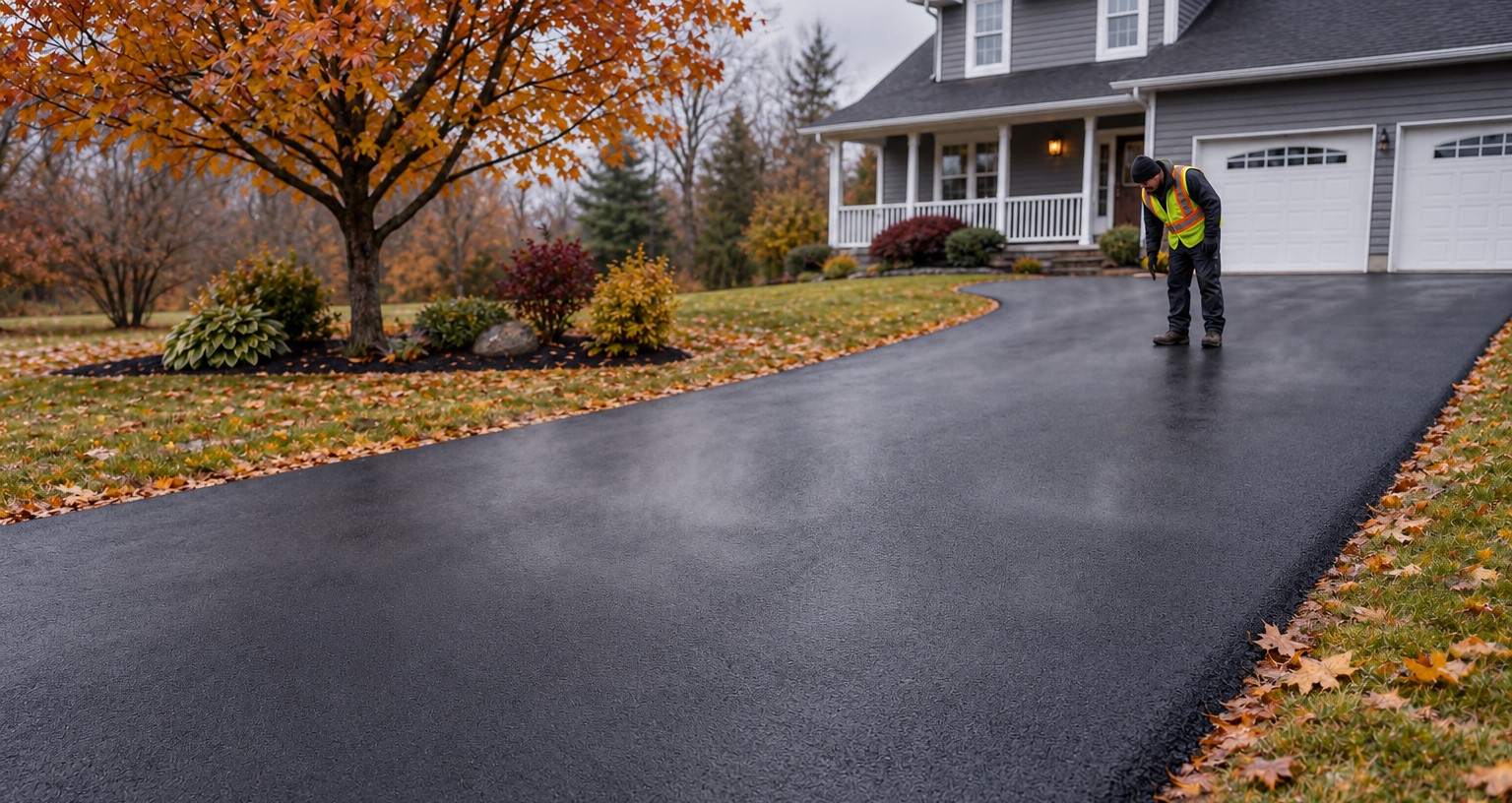
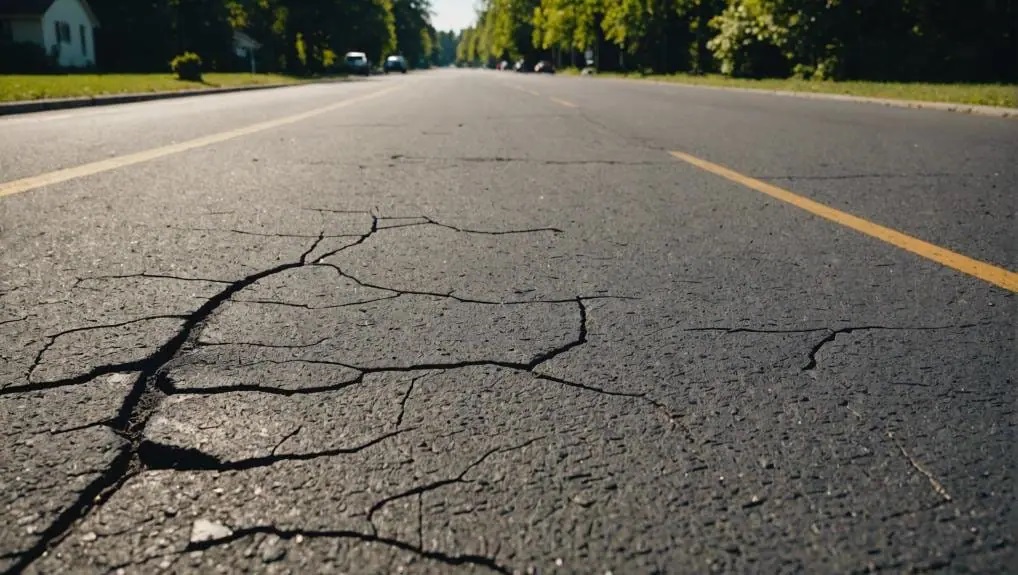
Late summer is also the best time of year to check the driveway you already have. Damage from the previous winter has come to the surface by August, and the summer heat has softened the weak spots enough to show where they are.
Drainage is easiest to check while the surface is clear and dry.
A garden hose left running across the driveway for a few minutes shows where water collects and which way it runs. Water that sits in one place for more than an hour marks a low spot, and low spots hold ice through the winter. If it runs toward the garage or the house, the problem is the grade rather than the surface.
Several conditions point to a full rebuild rather than a new layer on top:
- Cracks join up into small irregular shapes across a whole section of the driveway.
- Water still sits on the surface a day after the rain has stopped.
- A pothole that has been patched returns to the same spot within a few months.
- Sections have sunk, rutted along the wheel tracks, or feel soft underfoot.
One of these in a small area can often be dug out and rebuilt on its own. Several of them spread across the driveway usually mean the whole base has failed. The full breakdown of that decision, including the cases where resurfacing is the better value, is in its own post.
What Timing Cannot Fix
A driveway paved in perfect late-August conditions over a base that was rushed, or built on ground that was never properly inspected, will fail just as fast as one paved badly in October. Good timing improves the odds, and the base underneath decides the outcome.
If you’re replacing a driveway around Barrie this year, the weeks between now and the end of September are the best dates the season has left. A driveway that needs the base rebuilt is better booked properly than squeezed into the last week the asphalt plants are open.
Ital Paving has been building driveways across Barrie, Orillia, Gravenhurst, Bracebridge, and the Muskoka lakes since 1985. Estimates are free, every job carries a written warranty, and no deposit is required. You can request an onsite estimate to have your driveway looked at before the season closes.
Related Articles
Residential & Commercial Estimate Request
Ital Paving provides free, no-obligation onsite consultations for all residential and commercial paving projects.
Our experts will perform a technical assessment of your property in Barrie, Orillia, or Muskoka to ensure your new infrastructure meets the highest standards of safety and durability. Complete this short form today to get started.